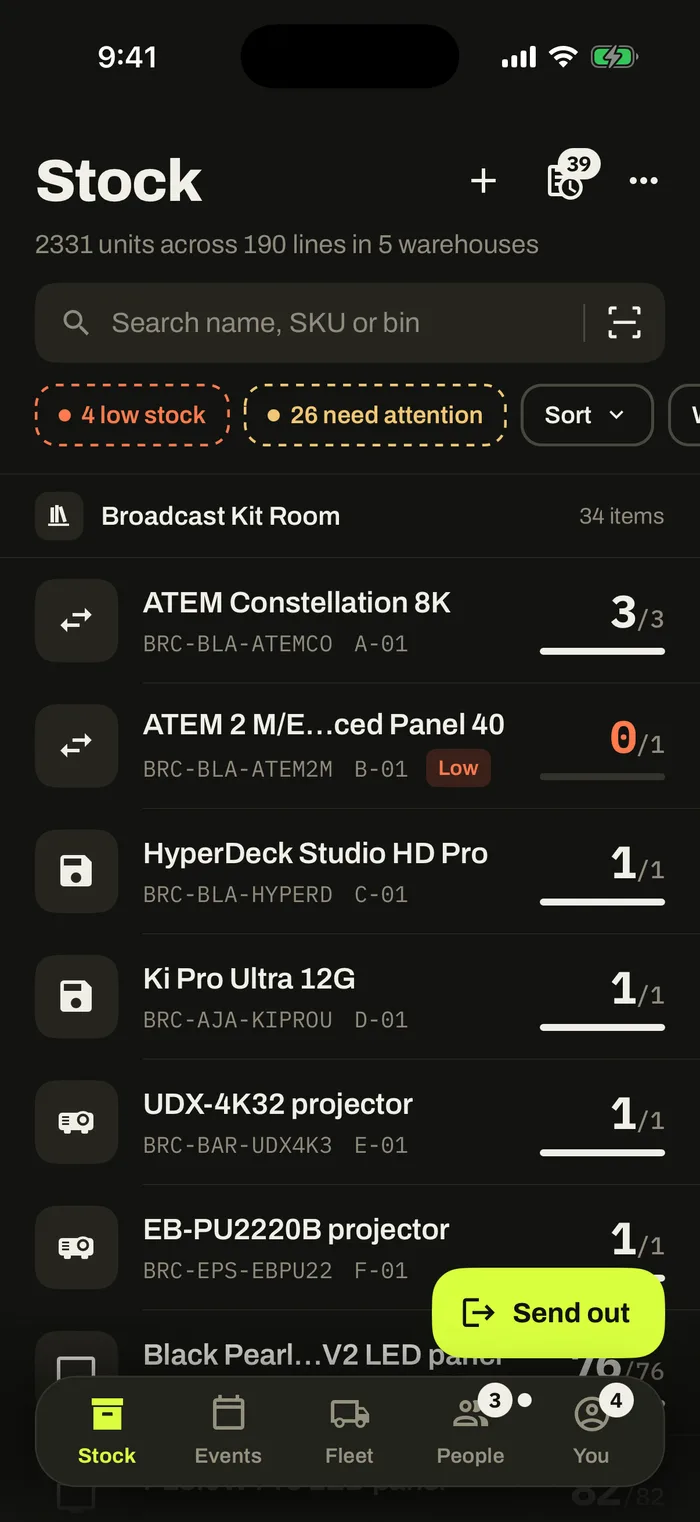
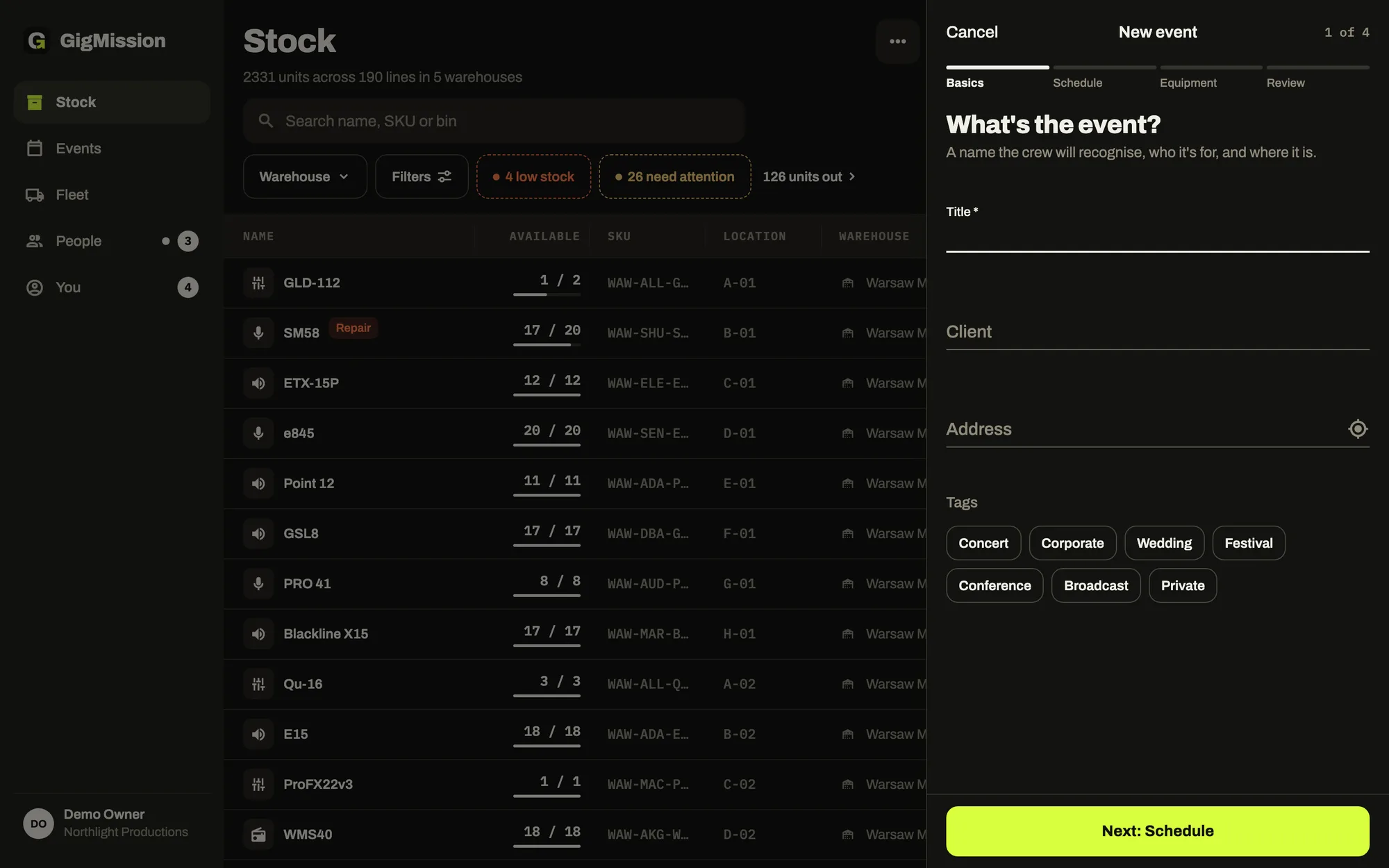
Stock
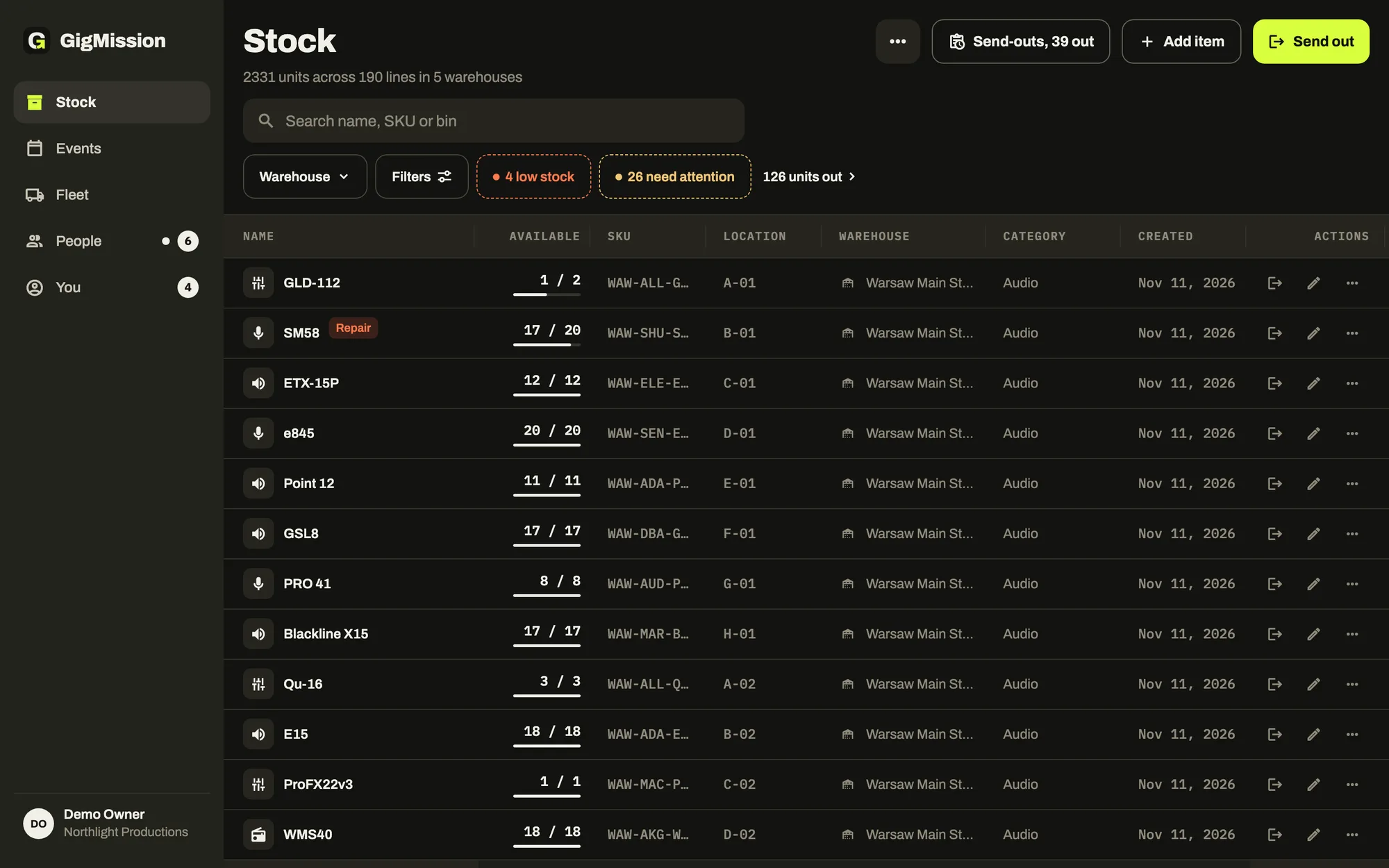
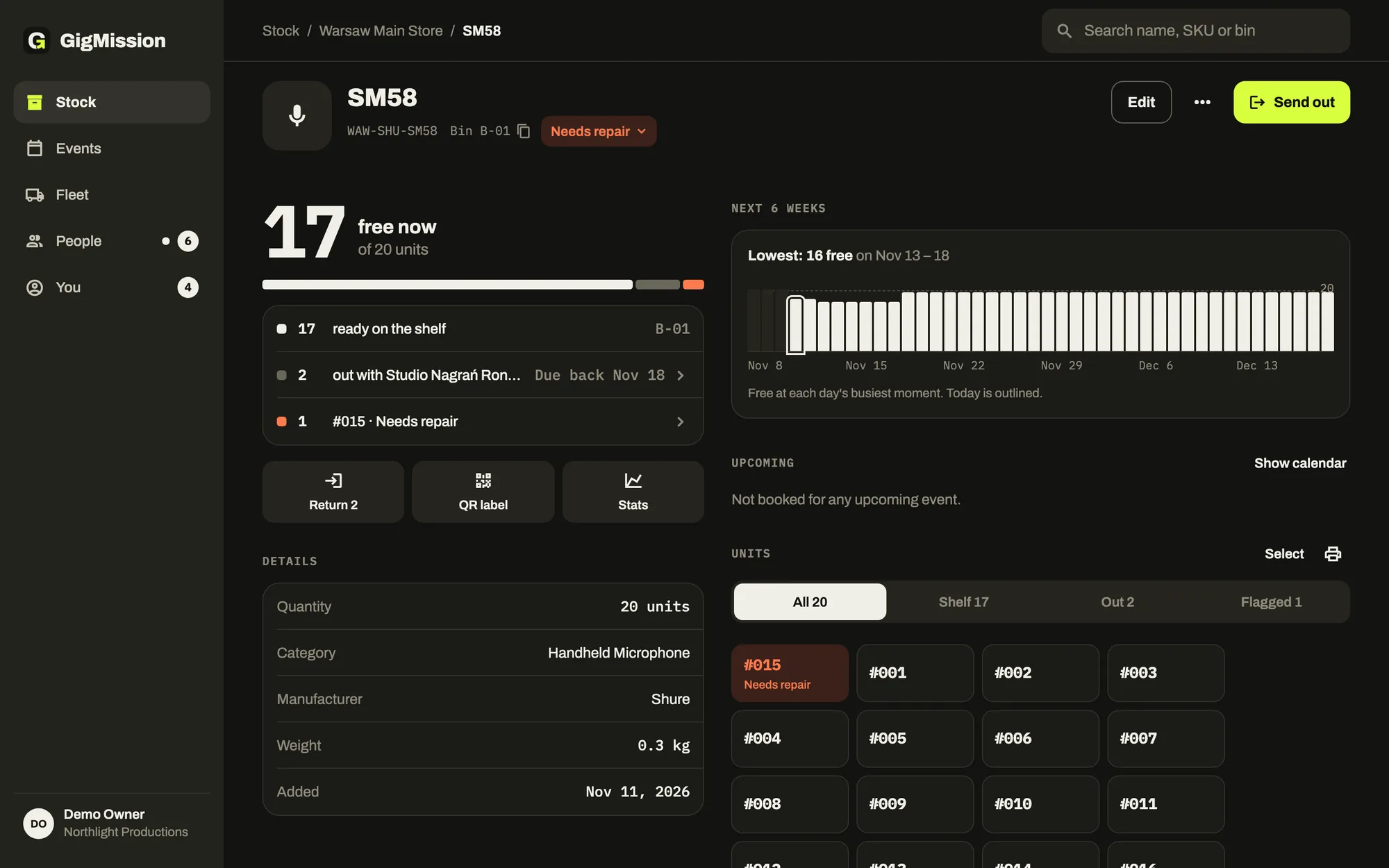
- Every unit tracked, with states from New to Needs repair
- QR labels with random codes, and a scanner
- All-or-nothing CSV import, low-stock alerts
$ open ./work/gigmission
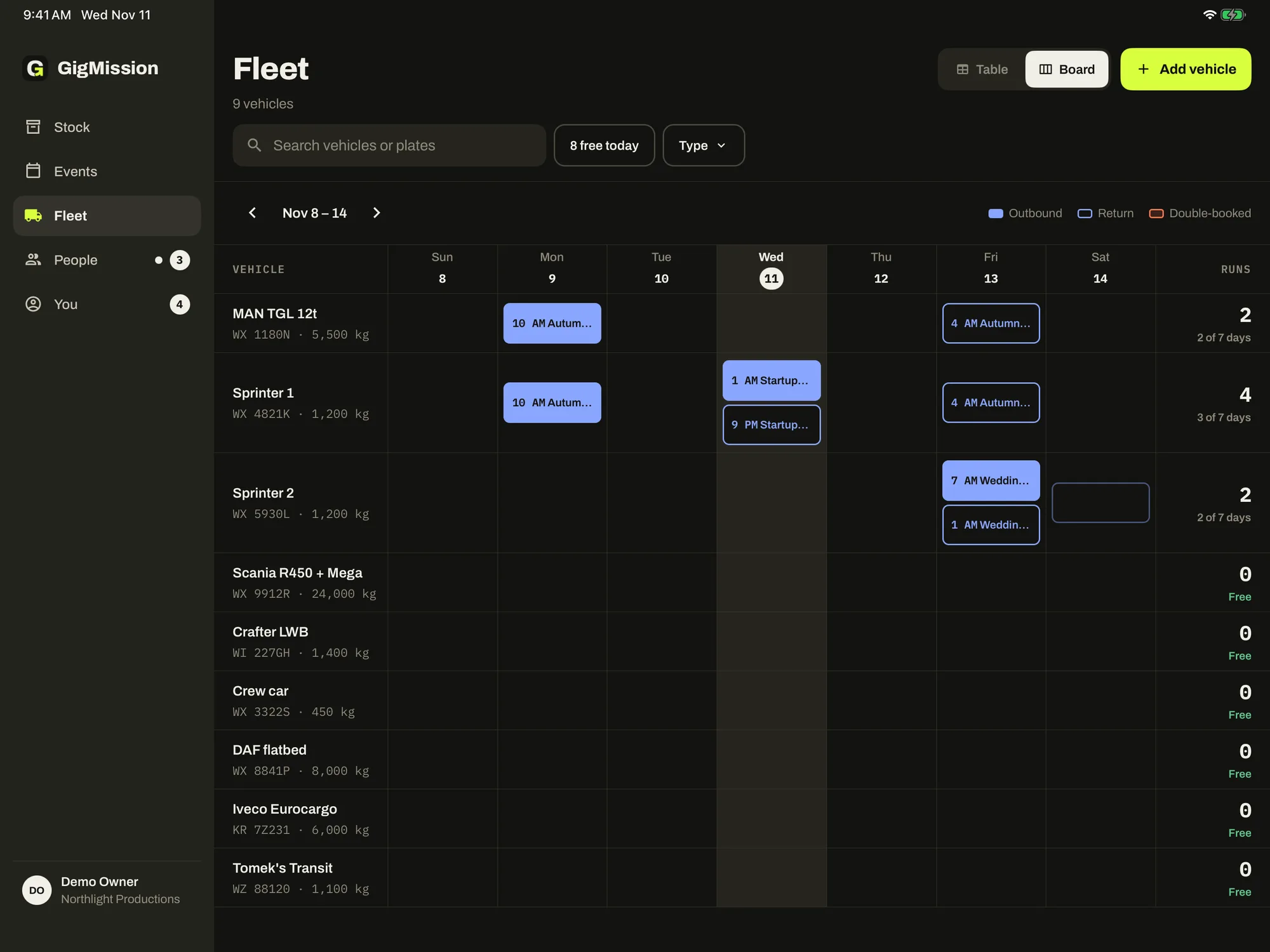
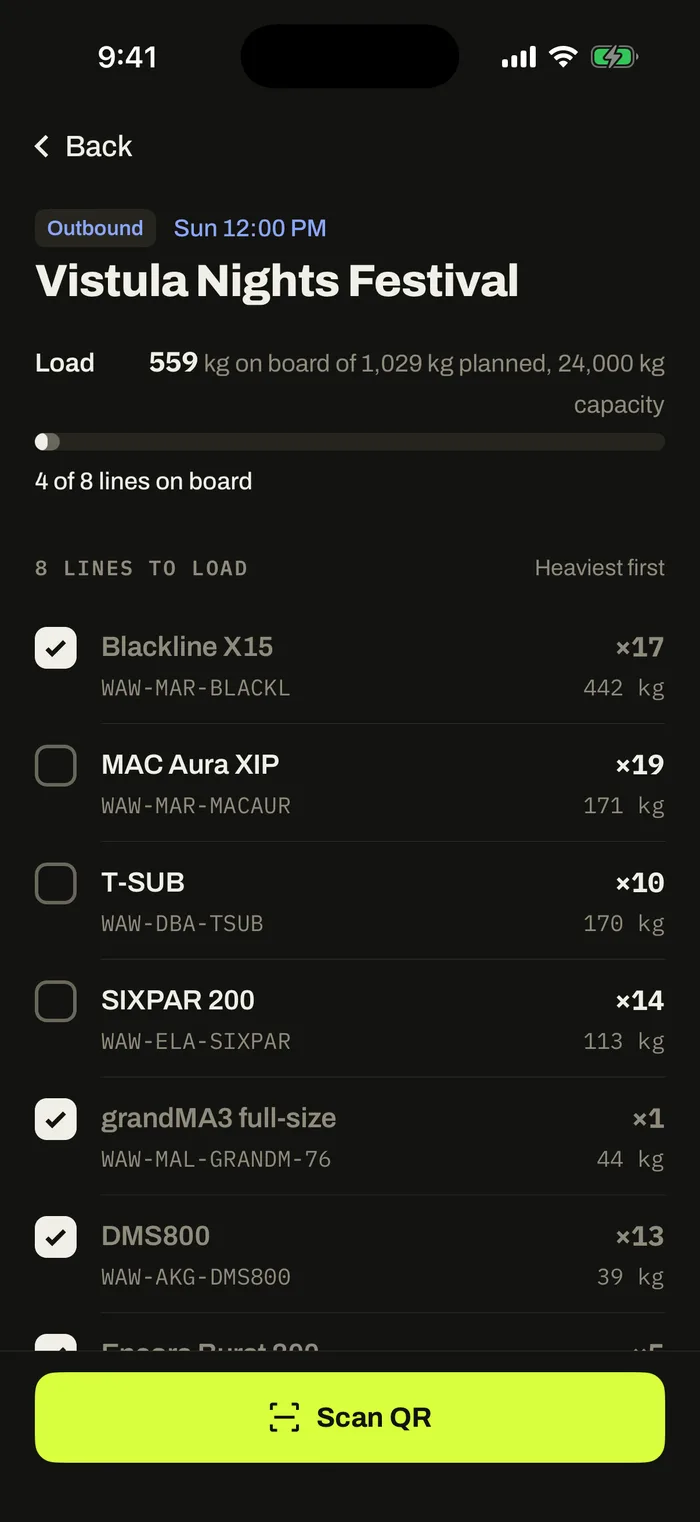
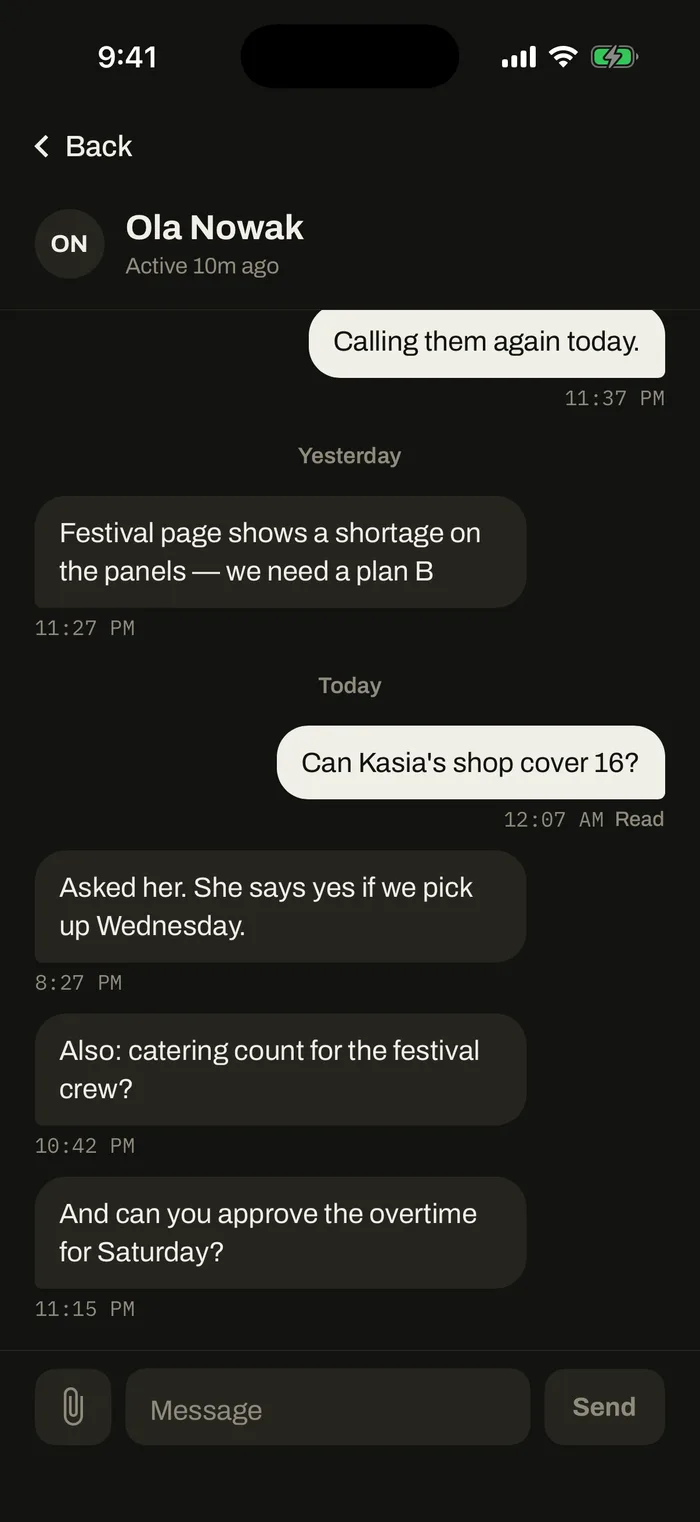
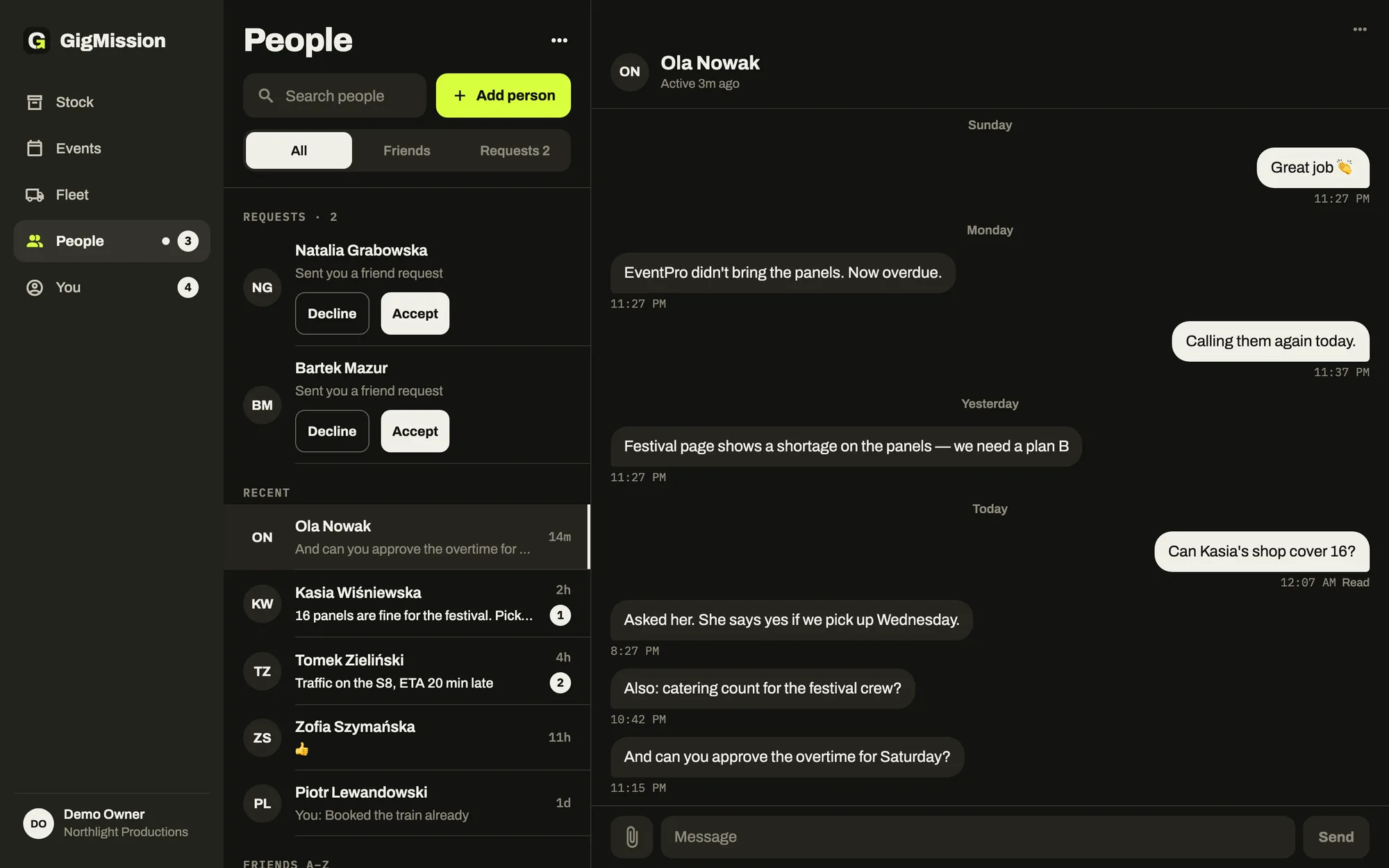
My own product for production companies that rent out sound, light and video gear. It tracks warehouses down to every single unit, books equipment for events against what is really free, plans the vans and trucks, and keeps the crew talking. One Expo codebase runs on iPhone, iPad, Android and the web.
platforms
iPhone · iPad · Android · web
commits
700+
typescript
~140k
lines, app + API + contracts
live
app.gigmission.com
since Aug 2026
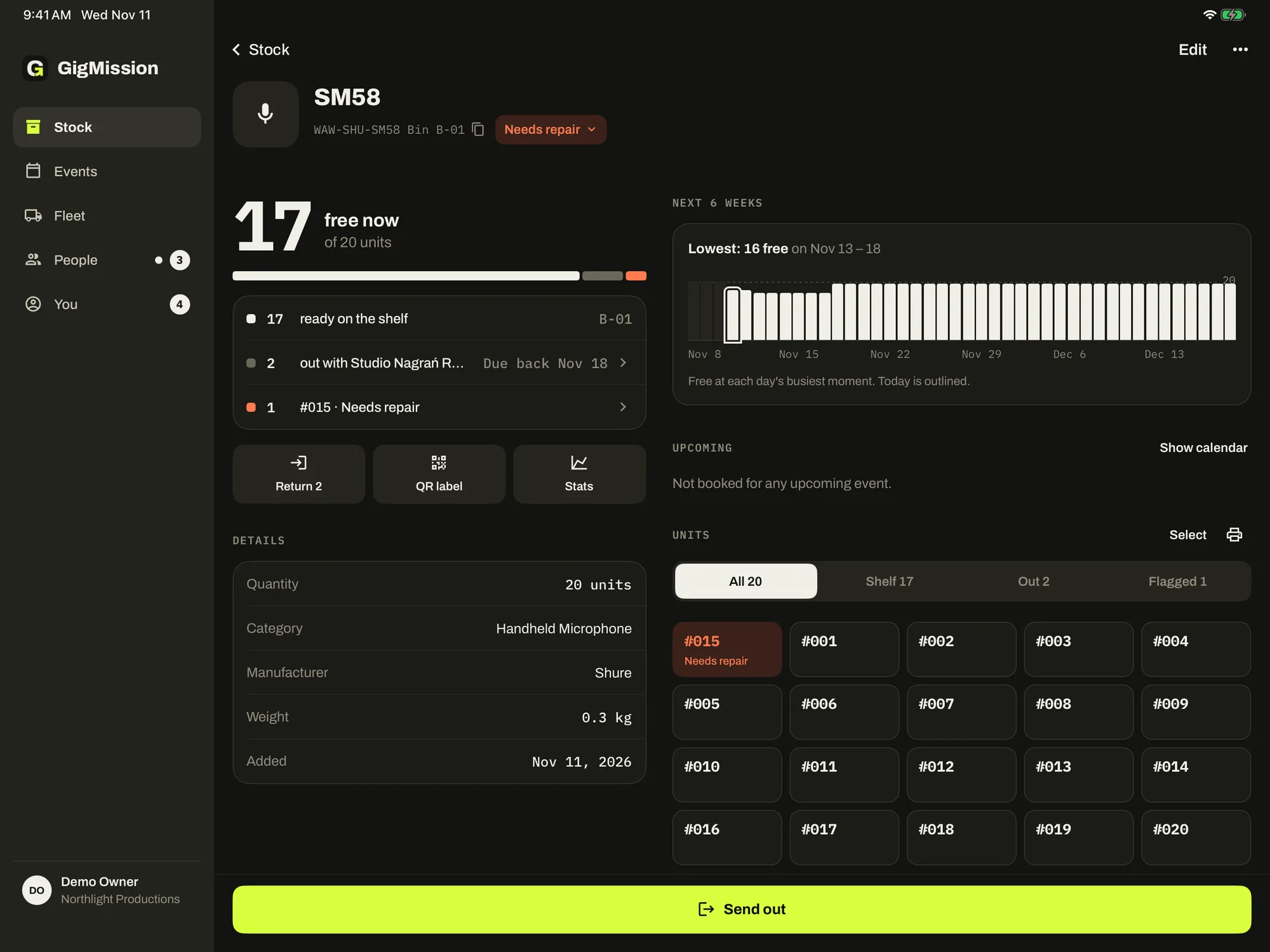
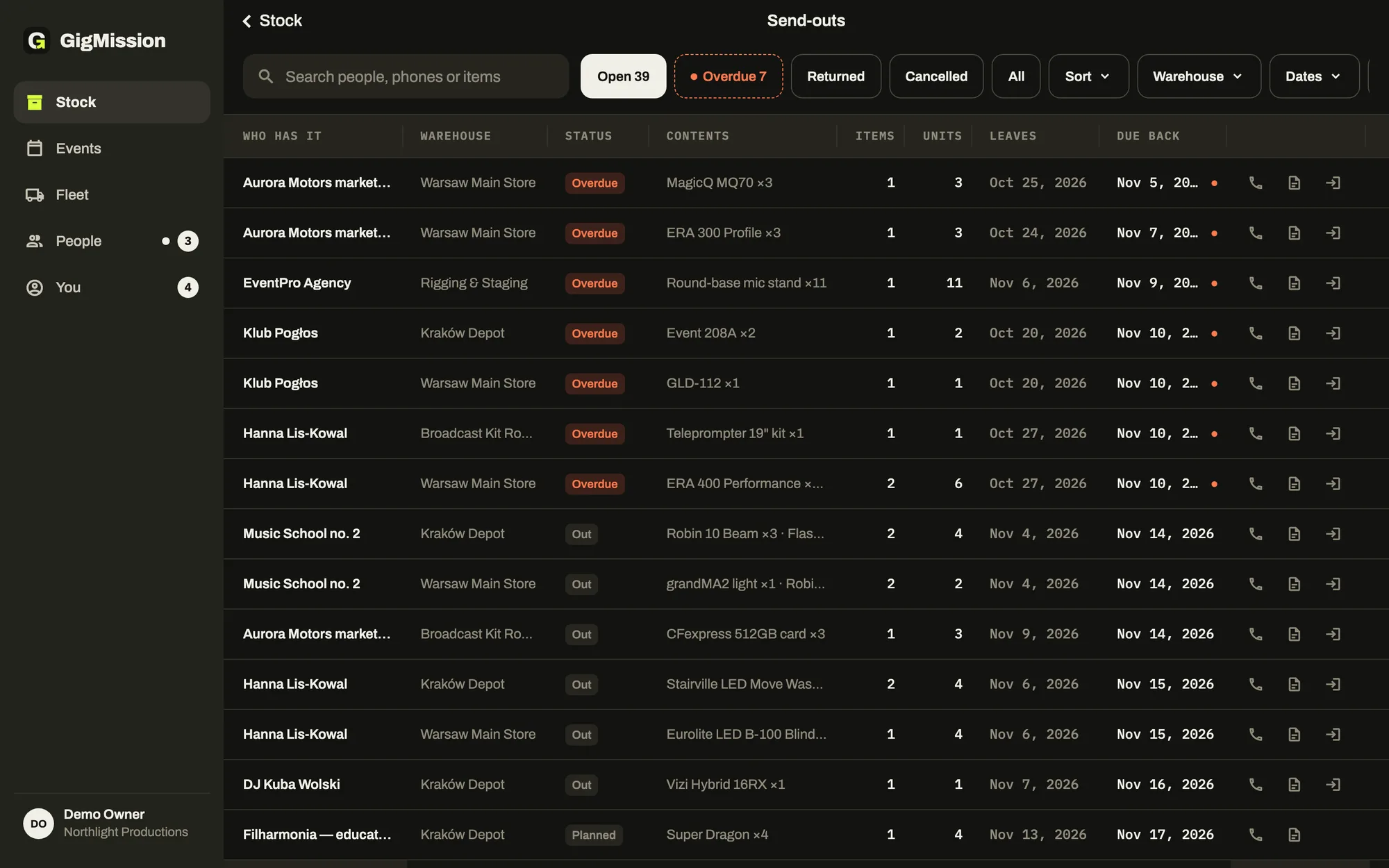
A production company lives on three questions: what gear do we have, where is it, and who is taking it where. GigMission answers them in one place. Every microphone, speaker and LED panel is a unit with a serial and a state, so you always know which one is broken, which one is out with a client and when it comes back.
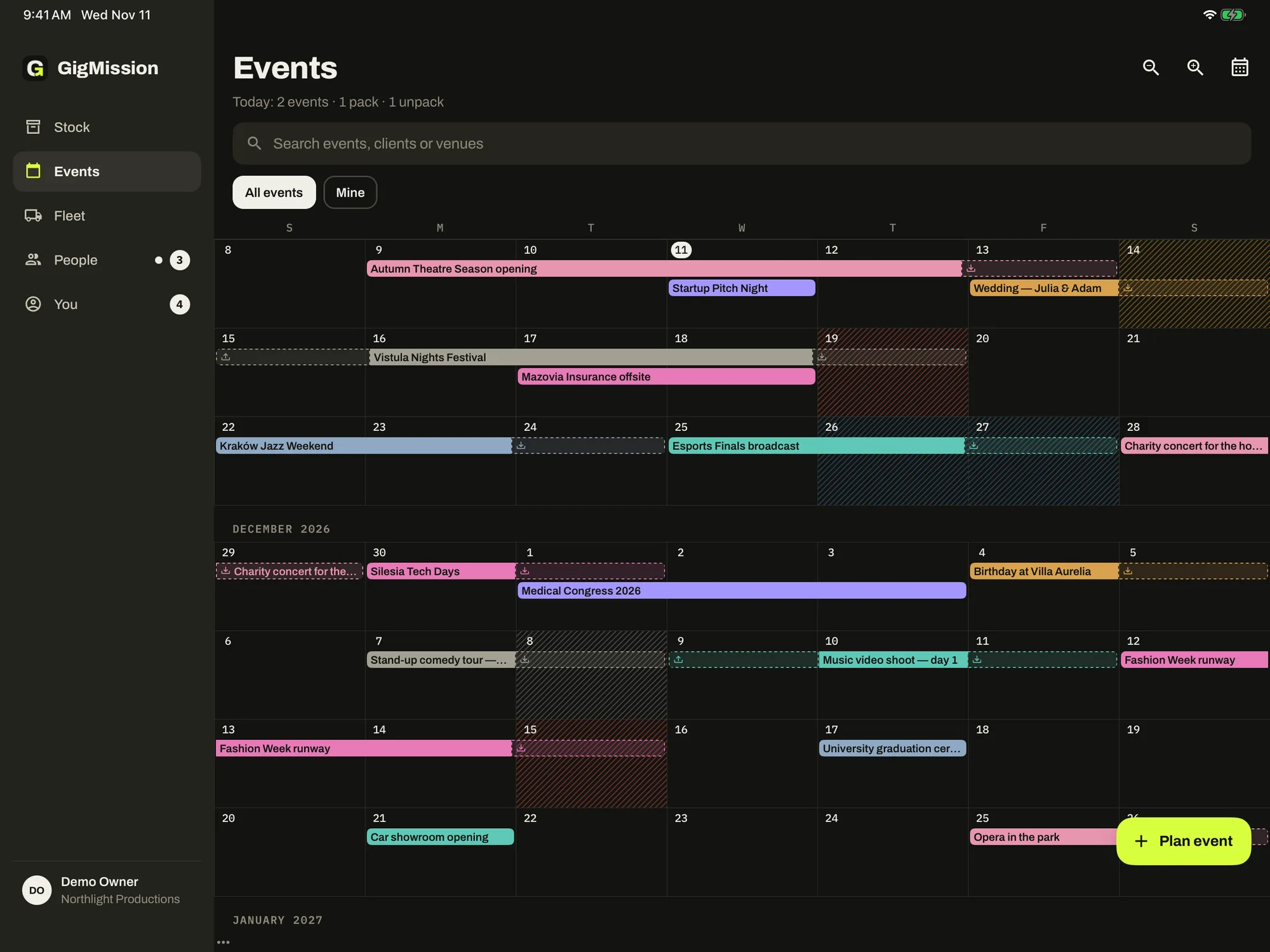
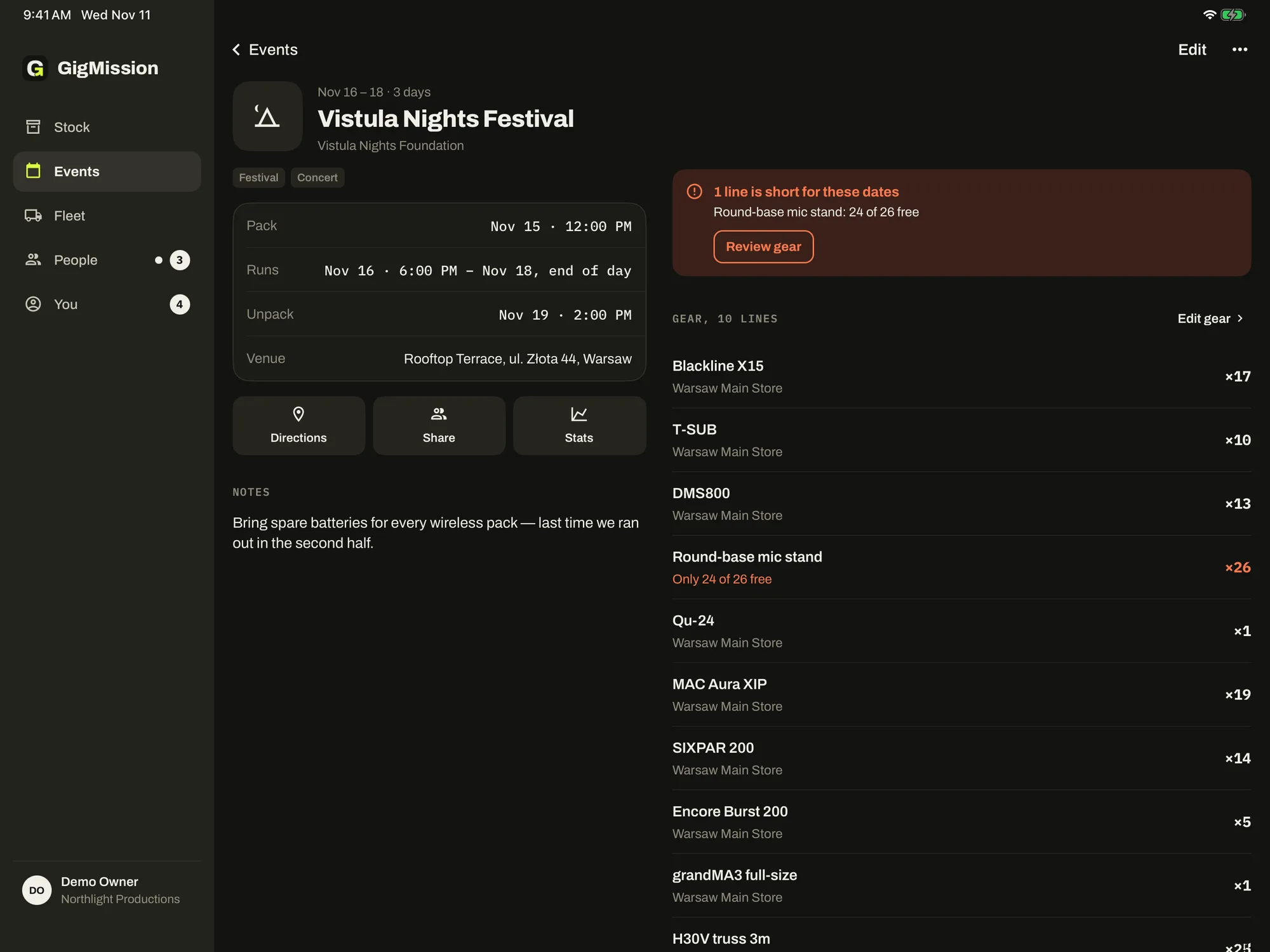
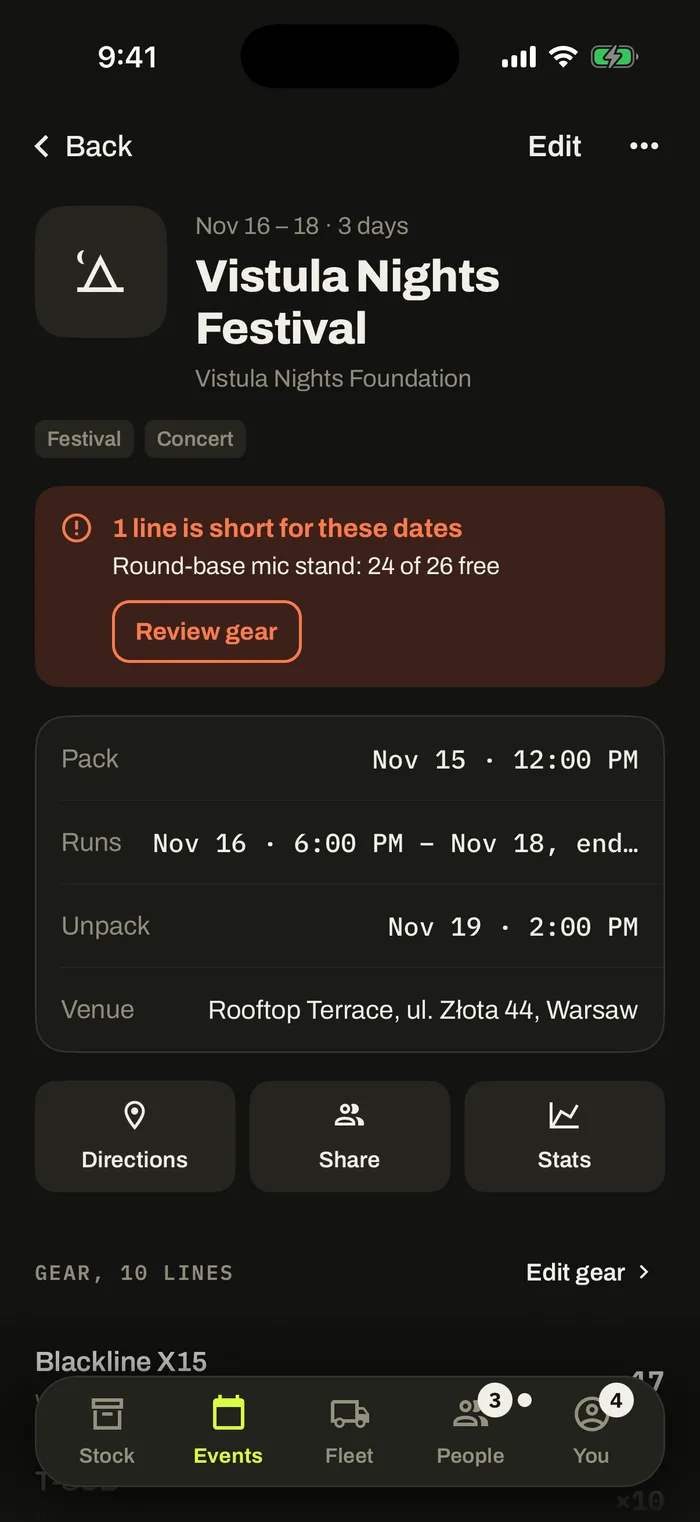
Planning an event books gear for its whole pack-to-unpack window, and the app refuses to promise what isn't there. The same numbers drive the stock list, the event wizard, the send-outs and the delivery run sheets.
ipad
iphone
web
app   expo router · react native · one codebase
      ├─ iPhone / iPad / Android  native lists, sheets, haptics, camera, Face ID
      └─ web                      static export, installable as a PWA
      data: TanStack Query · forms: TanStack Form · styles: Unistyles
            │
            │  REST + one WebSocket (chat and live "changed" frames)
            ▼
contracts   zod schemas, permission keys and catalogs shared by both sides
            │
            ▼
api   fastify · prisma 8 · postgresql · JWT with rotating refresh tokens
      ├─ ledger    one answer to "is there enough", under the item's row lock
      ├─ pdfs      send-out slips drawn with pdfme
      └─ mail      verification codes, invitations, new-device alerts
            │
            ▼
google cloud   Cloud Run for the API and the site · Cloud SQL · Secret Manager · deployed by GitHub Actions and Cloud Build
Every "is there enough" question goes through one ledger. An event holds its gear from pack to unpack, a send-out from leaving until it is back, an overdue one with no end, and a unit that needs repair is never counted. The check on save runs under the item's row lock, so two people booking the last units at once can't both win.
A stock line says "20 × SM58"; each of the twenty is a row with its own serial, state and history. Every change of quantity syncs the unit rows in the same transaction, and shrinking a line is refused if it would drop below what is already booked.
Each write declares which kinds of data it changed. This device refreshes those queries, and every other device gets a "changed" frame over its socket and does the same. A send-out returned on one phone updates the stock count on another about a quarter of a second later.
A signed-in phone opens without a connection, from a saved copy of what it last saw. It doesn't queue writes: availability is decided on the server, so a send-out made offline couldn't know if the gear was still free.
Request and response schemas live in a shared package. The API parses through them, the app checks responses against them in development, and a snapshot test fails the build if a change would break an older app still in people's pockets.
My own product. The screenshots use the demo data from the app's own seed script: invented people, companies, events and stock.